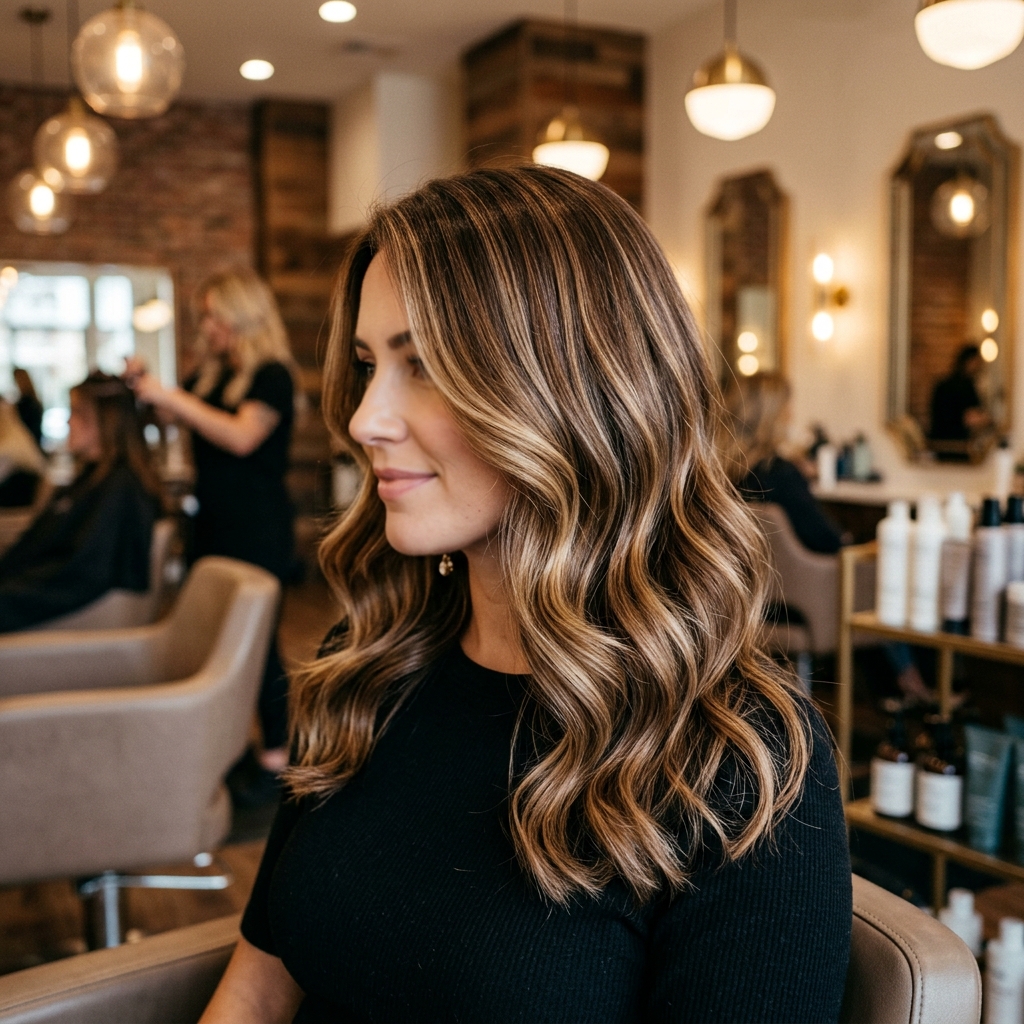
When someone books hair colour in Bearsden, the first question is usually about the final shade. Blonde, brunette, copper, gloss, balayage. That matters, of course. But the better question is what the hair can safely do today, and what you want it to look like six weeks from now.
Colour is a conversation. The clearer that conversation is, the easier it is to protect condition, avoid surprises, and plan a finish that works outside the salon.
Bring photos, but bring the right kind
Photos are useful when they show tone, depth, and placement. Try to bring two or three examples, not a full camera roll. Tell your stylist what you like about each one. It might be the soft face frame, the creamy tone, the root shadow, or the way the colour grows out.
It also helps to bring one photo you do not like. That can save a lot of guesswork, especially with blonde tones where "warm", "gold", "beige", and "ash" can mean different things to different people.
Be honest about your colour history
Box dye, old highlights, henna, previous toners, and colour done elsewhere all affect the result. Your stylist is not asking to judge your hair. They need to know what may be sitting inside the strand before they choose a formula.
If you are unsure, say so. Even a rough timeline helps: when you last coloured it, whether it was permanent or semi permanent, and whether your hair has been lightened before.
Leave enough time for the appointment
Some colour work is quick. Some is not. A root tint and finish has a different rhythm from a full head of highlights or a major colour correction. If you are booking before an event, give yourself space. Fresh colour often looks best after it has settled through one or two washes.
For new colour clients, a patch test may be needed before the appointment. If you are unsure whether you need one, call the salon before booking so the timing is clear.
Think about maintenance before choosing the shade
A soft brunette gloss and a bright lived-in blonde can both look beautiful, but they do not ask the same thing from your diary or your bathroom shelf. If you want low maintenance hair, say that plainly. Your stylist can build the placement and tone around how often you realistically want to return.
- Ask how often the colour will need refreshing.
- Check which shampoo and conditioner will protect the tone.
- Find out whether toner appointments are useful between bigger services.
- Ask what heat styling will do to the colour at home.
Aftercare keeps the colour expensive-looking
The colour service does the heavy lifting, but aftercare keeps it polished. Use the products your stylist recommends, lower the heat where you can, and protect the hair from repeated sun exposure if your colour fades quickly.
If your colour starts changing sooner than expected, bring that up at your next visit. Sometimes the fix is simple: a different toning schedule, a gentler cleansing routine, or a small change in placement.
A colour appointment should feel collaborative. Bring the inspiration, bring the history, and leave enough room for your stylist to guide what is possible. That is how you get a result that looks good on day one and still makes sense weeks later.