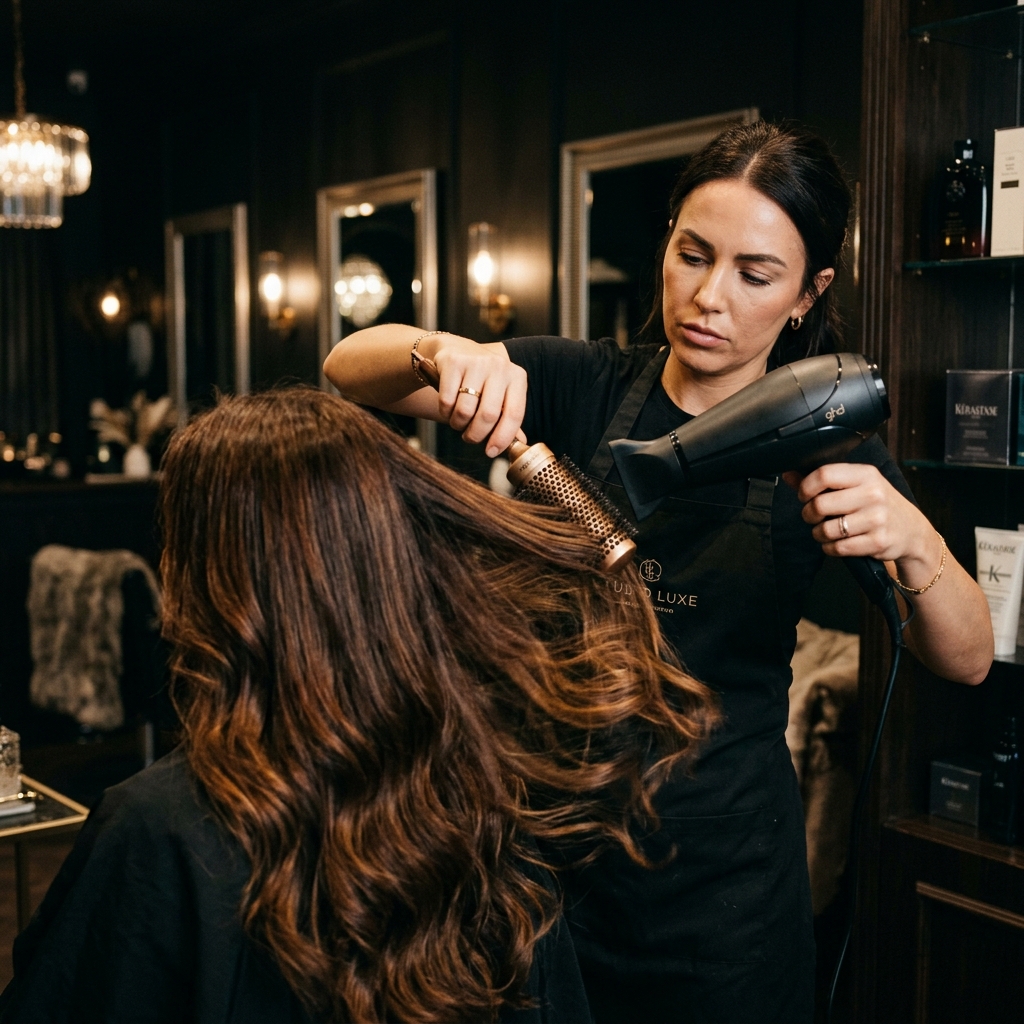
A curly cut in Bearsden should begin with how you actually wear your hair. Some clients arrive with a perfect wash day. Some arrive with second-day curls, a little frizz, and a more honest picture of daily life. Both are useful.
The aim is not to force curls into a shape they do not want. It is to create a cut that lets the pattern sit better, gives weight where it helps, and removes bulk where it drags the hair down.
Arrive with your curls visible
If possible, come in with your hair dry and worn in its natural curl pattern. Avoid tight buns, heavy oils, or scraped-back styles before the appointment. Your stylist needs to see how the curls sit, where they shrink, and which areas lose shape first.
If you usually diffuse, say so. If you air dry because you have ten minutes in the morning and no patience for fuss, say that too. The best cut is the one you can live with.
Talk about shape before length
Curly hair can look much shorter once it dries, so a conversation about shape is often more useful than a number of inches. You might want more lift around the crown, less weight at the sides, a softer fringe, or a perimeter that does not turn triangular after wash day.
Bring reference photos if they help, but choose images with a curl pattern close to your own. A loose wave, a tight coil, and a mixed curl pattern will not fall in the same way.
Expect product talk
A curly cut does not end with scissors. The finish matters because it shows how the shape behaves with moisture, hold, and drying technique. Your stylist may talk through cream, gel, mousse, or leave-in conditioner depending on your hair's density and texture.
You do not need a shelf full of products. You need the right amount of the right thing, applied in a way that suits your routine.
Drying is part of the result
How curls dry can change the whole haircut. Diffusing can encourage lift and definition. Air drying may give a softer finish but can leave roots flatter. Some curls need a little movement during drying. Others prefer being left alone.
Use the appointment to ask practical questions. Where should you apply product first? Should you rake, scrunch, or smooth? How wet should the hair be when product goes in? Small details make a big difference at home.
Book maintenance before the shape collapses
Curly cuts often grow out softly, but they still need maintenance. If your curls start sitting heavy, your fringe loses bounce, or the ends tangle more easily, it may be time for a reshaping appointment.
For many clients, a regular trim keeps the curl pattern fresher and makes wash day less of a battle. Your stylist can suggest timing based on your hair, not a generic schedule.
A good curly appointment should leave you with more than a cut. You should understand why the shape works, how to dry it, and what to do on the mornings when your curls have their own opinion.